
Unexpected support needs can arise in everyday life, especially for people living with disability. These can include mobility challenges, personal care difficulties, communication barriers, or trouble navigating workplace expectations. In many cases, these challenges can also impact a person’s ability to find and keep meaningful employment.
That’s where Specialised Supported Employment becomes important. It helps NDIS participants build skills, confidence, and long-term pathways into work while receiving tailored, ongoing support.
For families, carers, and support coordinators in Victoria, understanding eligibility is the first step toward unlocking meaningful employment opportunities.
Why Employment Support Matters in Daily Life
Employment is more than just income. It builds independence, social connection, routine, and confidence. However, without the right support, many participants face barriers such as:
- Difficulty understanding workplace instructions
- Challenges with travel and transport
- Anxiety in unfamiliar environments
- Limited access to inclusive employers
- Communication or sensory processing challenges
With the right NDIS employment assistance, these barriers can be reduced, and participants can participate more fully in their communities.
Services like those offered by Wavecare focus on building practical pathways to employment while also supporting daily living needs.
Why Employment Support Matters in Daily Life
Employment is more than just income. It builds independence, social connection, routine, and confidence. However, without the right support, many participants face barriers such as:
- Difficulty understanding workplace instructions
- Challenges with travel and transport
- Anxiety in unfamiliar environments
- Limited access to inclusive employers
- Communication or sensory processing challenges
With the right NDIS employment assistance, these barriers can be reduced, and participants can participate more fully in their communities.
Services like those offered by Wavecare focus on building practical pathways to employment while also supporting daily living needs.
What is Specialised Supported Employment?
Specialised Supported Employment refers to structured, individualised support designed to help people with disability enter, learn, and maintain employment in a safe and supportive environment.
It is part of broader NDIS employment support services, and often includes training, on-the-job assistance, workplace modifications, and ongoing coaching.
Specialised Supported Employment Explained Simply
In simple terms, it means:
- Helping someone prepare for work
- Supporting them during job placement
- Providing ongoing assistance to maintain employment
- Adjusting support based on individual needs
It is not a “one-size-fits-all” program. Instead, it is tailored to the person’s abilities, goals, and support requirements.
You can learn more about structured employment pathways through services like Wavecare Specialised Support Employment.
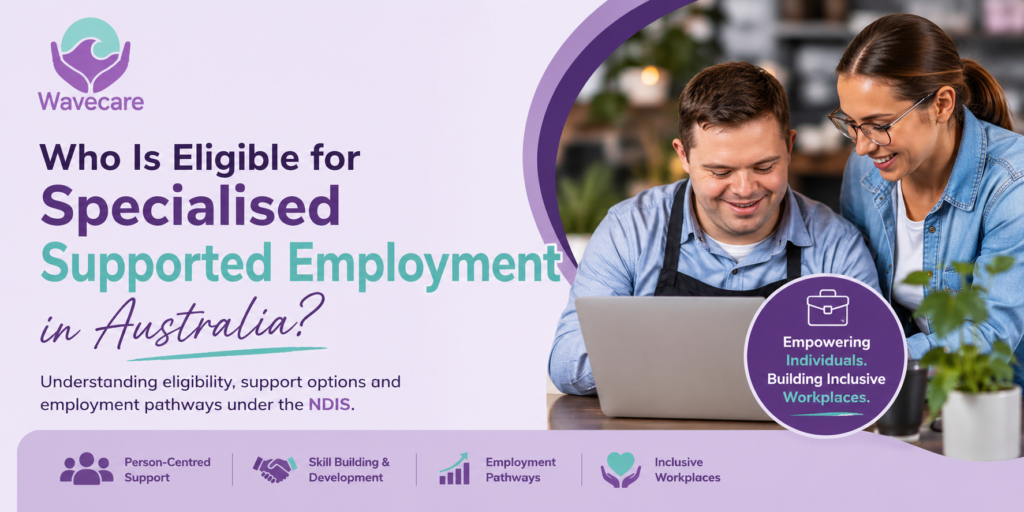
Who is Eligible for Specialised Supported Employment in Australia?
Eligibility for NDIS specialised supported employment is based on a participant’s functional capacity, goals, and NDIS plan funding. Generally, it may be suitable for people who:
- Have a permanent disability affecting employment participation
- Require ongoing support to maintain a job
- Need assistance developing workplace skills
- Experience challenges with communication, mobility, or learning
- Are preparing for entry into open or supported employment
According to the , supports must be “reasonable and necessary” and aligned with a participant’s goals, including employment goals.
This means eligibility is not based only on diagnosis, but on how the disability impacts daily functioning and work capacity.
How Specialised Supported Employment Works
Step 1: Assessment and Planning
A support worker or employment specialist assesses:
- Work readiness
- Communication needs
- Mobility or transport barriers
- Learning style and support requirements
- Workplace safety risks
This stage ensures the support plan is realistic and personalised.
Step 2: Skill Development and Training
Participants may receive training in:
- Workplace communication
- Time management
- Personal organisation
- Travel training
- Job-specific skills
These skills are part of broader NDIS work support services designed to build confidence gradually.
Step 3: Job Placement and Onboarding
Once ready, participants are supported into suitable roles. This may involve:
- Employer engagement
- Workplace adjustments
- Structured onboarding support
- Peer or mentor guidance
Step 4: Ongoing Workplace Support
Even after placement, ongoing support continues. This may include:
- Regular check-ins
- Problem-solving workplace issues
- Emotional support
- Skill reinforcement
This is what makes supported workplace programs effective long-term.
Common Daily Barriers that Affect Employment
Many participants face daily challenges that directly impact employment success. These include:
- Difficulty completing personal care routines before work
- Household management stress affecting focus
- Mobility limitations when travelling to work
- Communication barriers in team environments
- Sensory overload in busy workplaces
Qualified support professionals assess these challenges in real-world settings. For example, they may review how a participant manages morning routines, transport planning, and workplace readiness.
This is why services like disability employment support Melbourne are essential for building independence step-by-step.
What a Support Professional Typically Assesses
A trained NDIS support worker or employment specialist may evaluate:
- Home safety risks that affect work readiness
- Accessibility barriers in daily living
- Transport and travel independence
- Communication and social interaction skills
- Ability to manage workplace expectations
- Environmental triggers (noise, stress, fatigue)
These assessments help shape a practical employment pathway rather than a theoretical plan.
In Victoria, providers offering NDIS employment assistance Victoria often integrate both home and workplace support to ensure consistency.
Supported Employment Providers in Victoria
Choosing the right provider matters. Supported employment providers Victoria should offer:
- Person-centred planning
- Real workplace experience
- Ongoing coaching and support
- Flexible, participant-led services
- Collaboration with families and coordinators
For example, Wavecare provides a range of NDIS supports, including employment-focused assistance, community participation, and daily living support to help participants build independence step by step.
Why Professional Support Improves Outcomes
Working with trained professionals ensures participants receive structured and safe support.
Key benefits include:
- Reliable support tailored to individual needs
- Safer transitions into work environments
- Improved confidence and independence
- Reduced risk of workplace stress or burnout
- Stronger long-term employment outcomes
- Better coordination between families and providers
Professional support also ensures that goals remain realistic and aligned with NDIS funding requirements.
Employment Pathway Programs and Community Inclusion
Many participants benefit from employment pathway programs that combine training, volunteering, and supported work placements.
These programs often include:
- Community-based skill building
- Group learning environments
- Workplace simulations
- Social participation activities
These experiences help participants prepare for real employment in a gradual and supportive way.
Community participation also plays a big role. Engaging in structured activities builds confidence and social communication skills, which are essential for workplace success.
External Insights on Disability Employment in Australia
Disability employment services in Australia are guided by national frameworks. You can explore:
- for insights into national disability trends
- for government support frameworks
- for eligibility and funding rules
These sources help families and participants understand how employment support fits within the broader Australian disability system.
When to Seek Employment Support
It is a good idea to seek help when:
- Employment attempts have been unsuccessful due to disability barriers
- Daily routines are affecting job readiness
- Transport or communication challenges are limiting opportunities
- Anxiety or stress prevents workplace participation
- There is uncertainty about suitable job options
Early support often prevents long-term setbacks and helps participants stay engaged in their goals.
NDIS Support Services in Your Local Area
In Victoria, participants can access a wide range of supports, including NDIS work support services, daily living assistance, and community participation programs.
These services are designed to improve independence, build life skills, and support long-term employment outcomes.
Providers like Wavecare focus on practical, real-world support that helps participants transition into meaningful employment while maintaining daily stability.
Why Early Intervention Matters
Early support leads to better long-term outcomes. When participants receive guidance early, they are more likely to:
- Develop strong workplace habits
- Build confidence in social settings
- Maintain stable employment
- Reduce long-term dependency on support services
Even small improvements in daily routines can significantly impact employment readiness.
Frequently Asked Questions
What is specialised supported employment?
It is a structured NDIS support service that helps people with disability prepare for, find, and maintain employment with ongoing assistance.
Who can access NDIS employment support?
Participants with a disability that impacts their ability to work may be eligible if employment is part of their NDIS goals and plan funding.
How does specialised supported employment work?
It involves assessment, skill training, job placement, and ongoing workplace support tailored to individual needs.
Is supported employment only for people already working?
No, it also supports people preparing for their first job or transitioning into new employment.
What support is included in employment programs?
Support may include job coaching, travel training, communication support, and workplace adjustment assistance.
Can families be involved in the process?
Yes, families and carers often play an important role in planning, support coordination, and ongoing encouragement.
Final Thoughts and Next Steps
If you or someone you support is exploring Specialised Supported Employment, getting the right guidance early can make a meaningful difference. Structured support helps participants build confidence, independence, and long-term employment opportunities in a safe and practical way.
For assistance or to learn more about available NDIS employment services, contact the team on 0401 434 001 or visit the Wavecare contact page.
You may also call us to discuss available support services in Victoria and how they may align with your NDIS goals.