
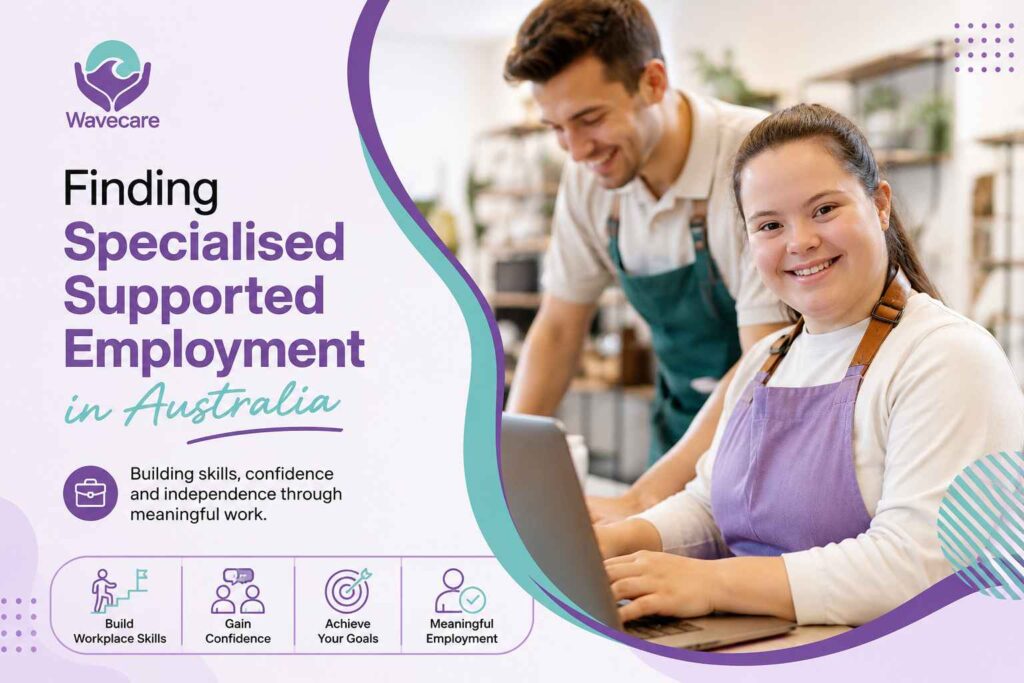
Finding meaningful employment can be an exciting milestone, but it may also bring challenges for people living with disability. Many participants want to develop new skills, earn an income, become more independent, and contribute to their community. However, barriers such as limited work experience, communication difficulties, reduced confidence, mobility needs, or workplace accessibility can make it harder to secure and maintain employment. That’s where specialised supported employment can make a real difference.
Rather than focusing only on getting a job, specialised supported employment helps participants build practical workplace skills, confidence, and independence at a pace that suits their individual goals. Every person’s employment journey is different. Some may be preparing for their first workplace experience after finishing school, while others may wish to return to work after illness or injury or explore new career opportunities that better match their abilities.
Under the NDIS, employment supports may assist eligible participants to develop job readiness, improve communication skills, gain work experience, and build the confidence needed for long-term employment. These supports are designed around each participant’s strengths, interests, and aspirations instead of following a one-size-fits-all approach.
With personalised guidance from experienced employment professionals, participants can work towards meaningful employment goals while developing valuable life skills that also support greater independence and community participation.
Why Specialised Supported Employment Matters
Employment is about much more than earning an income. It creates opportunities to build confidence, develop new skills, meet people, and increase independence. For many Australians living with disability, meaningful employment also contributes to improved wellbeing and a stronger sense of purpose.
Specialised supported employment provides structured assistance that recognises each participant’s unique abilities and support needs. Instead of expecting participants to fit into traditional workplaces immediately, supports focus on building skills gradually while creating positive workplace experiences.
Some of the key benefits include:
- Developing practical workplace skills for everyday employment.
- Building communication and teamwork abilities.
- Increasing confidence in social and professional settings.
- Creating consistent daily routines and responsibilities.
- Supporting greater independence through meaningful work.
- Improving self-esteem by achieving personal goals.
- Preparing participants for open employment where appropriate.
- Encouraging long-term career development based on individual strengths.
- Supporting financial independence alongside other personal goals.
- Helping participants achieve employment-related outcomes in their NDIS plan.
Employment pathways vary for every individual. Success looks different for everyone, and supported employment recognises that each participant’s goals, abilities, and aspirations deserve a personalised approach.
What Is Specialised Supported Employment?
Specialised Supported Employment Australia refers to employment opportunities designed for people with disability who require ongoing workplace support because of their functional capacity. These workplaces provide structured support while allowing participants to perform meaningful work in a safe and inclusive environment.
Unlike standard employment programs, supported employment combines productive work with personalised assistance that may include workplace supervision, skill development, workplace adjustments, and ongoing coaching.
Depending on individual goals and approved NDIS funding, NDIS supported employment may include:
- Vocational training
- Workplace skill development
- On-the-job support
- Capacity building activities
- Communication coaching
- Employer collaboration
- Workplace adjustments
- Employment pathway planning
The focus is always on helping participants build confidence, independence, and practical workplace skills rather than guaranteeing employment outcomes.
Common Daily Challenges When Looking for Employment
Finding work is not always straightforward. People living with disability often experience additional barriers that can affect employment opportunities.
Some common challenges include:
- Limited opportunities to gain practical work experience.
- Difficulty finding disability-inclusive employers.
- Anxiety before interviews or starting a new workplace.
- Communication challenges in professional settings.
- Physical accessibility barriers.
- Limited confidence when learning new workplace tasks.
- Difficulty establishing workplace routines.
- Limited transport options.
- Needing workplace adjustments to perform tasks safely.
- Transitioning from school into employment without previous experience.
These challenges do not prevent participants from achieving employment goals. With the right disability employment support, many people gradually develop the confidence and skills needed to succeed in workplaces that value inclusion and diversity.
Common Employment Challenges
Participants seeking employment support for people with disability may experience challenges such as:
- Learning workplace communication and professional behaviour.
- Managing anxiety during interviews or workplace interactions.
- Developing reliable time management skills.
- Accessing suitable transport to work.
- Understanding employer expectations.
- Building confidence to work independently.
- Finding workplaces that provide appropriate adjustments.
Personalised specialised employment support helps participants address these challenges while progressing towards realistic employment goals.
When Participants Should Seek Employment Support
Seeking support early can make the employment journey more positive and less overwhelming. Employment assistance may benefit participants who want to build skills before entering the workforce or who need ongoing workplace support to achieve their goals.
Participants may consider NDIS employment supports if they are:
- Looking for their first job.
- Transitioning from school through School Leaver Employment Supports (SLES).
- Returning to employment after illness or injury.
- Wanting to improve workplace confidence.
- Developing communication or teamwork skills.
- Exploring different employment pathways.
- Building capacity for future open employment.
- Looking for structured workplace experience.
- Needing workplace adjustments or ongoing support.
- Working towards greater independence through employment.
Employment support should always reflect the participant’s individual goals, functional capacity, and approved NDIS funding. Not every pathway is the same, and supports are tailored to each person’s circumstances.
How Supported Employment Builds Long-Term Independence
Employment contributes to more than financial stability. It can also help participants build life skills that support greater independence in everyday situations.
Through supported employment services, participants often strengthen their:
- Communication skills
- Workplace confidence
- Teamwork
- Problem-solving abilities
- Time management
- Workplace responsibility
- Social participation
- Decision-making
- Capacity building
- Independent living skills
These outcomes may also positively influence other areas of life, including community participation, relationships, and personal wellbeing.
What Qualified Professionals Typically Assess
Every participant has different strengths, goals, and support needs. Before recommending a pathway, qualified professionals take time to understand the participant as a whole person. This helps ensure employment supports are meaningful, achievable, and aligned with their NDIS goals.
An employment assessment is not about deciding whether someone can work. Instead, it identifies the supports that may help them participate in employment with greater confidence and independence.
Professionals commonly assess:
- Employment goals and long-term aspirations
- Personal interests and preferred industries
- Existing workplace skills and previous experience
- Functional capacity
- Communication skills
- Learning style and preferred training methods
- Mobility and accessibility requirements
- Workplace support needs
- Behavioural support requirements where appropriate
- Transport options
- Workplace adjustments
- Capacity building opportunities
- Long-term career planning
These assessments may involve discussions with participants, family members, carers, Support Coordinators, Occupational Therapists, allied health professionals, and employers where appropriate.
The aim is to create an employment pathway that reflects each person’s abilities rather than focusing on limitations.
How NDIS Supported Employment Works
Many participants ask, “What is supported employment under the NDIS?”
Supported employment provides opportunities for people with disability who require ongoing support in the workplace due to their functional capacity.
Depending on individual circumstances and approved NDIS funding, supports may include:
- Workplace skill development
- Vocational training
- Job readiness programs
- Communication coaching
- Workplace routine development
- On-the-job assistance
- Capacity building supports
- Employer collaboration
- Workplace adjustments
- Ongoing mentoring
Rather than providing identical services to every participant, supports are tailored around personal goals, abilities, and employment aspirations.
Some participants may work in supported workplaces, while others use employment supports to prepare for open employment in the future.
The pathway is always individual.
Who Is Eligible for Specialised Supported Employment?
A common question participants ask is, “Who is eligible for specialised supported employment?”
Eligibility depends on several factors and is assessed individually.
This may include:
- Functional capacity
- Employment goals
- Approved NDIS funding
- Support needs within the workplace
- Recommendations from qualified professionals
- Individual circumstances
There is no guarantee that employment supports or funding will be approved.
Participants should discuss their employment goals with their NDIS Planner, Local Area Coordinator (LAC), Support Coordinator, or employment support provider to understand which supports may be appropriate for their situation.
Is Supported Employment Funded by the NDIS?
Another frequently asked question is, “Is supported employment funded by the NDIS?”
The NDIS may fund employment-related supports where they are considered reasonable and necessary and align with a participant’s goals.
Funding varies between participants.
Depending on an individual’s plan, supports may include:
- Capacity Building Supports
- School Leaver Employment Supports (SLES)
- Workplace support NDIS services
- Employment planning
- Skill development
- Workplace preparation
Funding decisions are always made individually by the National Disability Insurance Agency (NDIA).
Participants should review their current NDIS plan before accessing employment supports.
For further information about NDIS employment funding, visit the National Disability Insurance Agency.
Local Support Across Australia
Finding the right provider is just as important as choosing the right employment pathway.
Participants looking for Specialised Supported Employment Australia services should choose an experienced Registered NDIS Provider that understands employment planning, capacity building, and personalised support.
Wavecare works with participants across Victoria to help build workplace confidence, practical skills, and greater independence through tailored employment supports.
Learn more about Wavecare’s Specialised Support Employment services here.
Employment supports vary depending on:
- Individual NDIS plans
- Provider capability
- Local employment opportunities
- Workplace availability
- Participant goals
- Functional capacity
Every participant deserves a personalised employment pathway that reflects their strengths, aspirations, and preferred pace of learning.
Why Professional Employment Support Is Valuable
Professional disability employment services provide far more than job assistance.
Experienced employment professionals help participants build confidence while creating practical pathways towards meaningful employment.
Benefits may include:
- Personalised employment planning based on individual goals.
- Workplace skill development tailored to participant strengths.
- Support with communication and teamwork.
- Assistance identifying suitable employment pathways.
- Collaboration with employers where appropriate.
- Long-term capacity building for greater independence.
Rather than focusing only on finding employment, professional supports encourage participants to develop life skills that continue benefiting them well beyond the workplace.
Building Skills That Last Beyond Employment
Employment often creates opportunities to learn valuable life skills that extend into everyday living.
Participants frequently develop:
- Better communication
- Increased confidence
- Improved time management
- Stronger teamwork skills
- Greater independence
- Better problem-solving abilities
- Increased social participation
- Improved self-esteem
- Workplace responsibility
- Career development skills
These skills contribute to broader NDIS goals, including independent living, community participation, and personal growth.
Whether a participant is preparing for their first workplace experience or planning long-term career development, ongoing support can make each step more achievable.
Frequently Asked Questions
Lorem ipsum dolor sit amet, consectetur adipiscing elit. Ut elit tellus, luctus nec ullamcorper mattis, pulvinar dapibus leo.
What is Specialised Supported Employment?
Specialised supported employment is designed for people with disability who need ongoing workplace support because of their functional capacity. It provides meaningful work opportunities alongside personalised assistance, workplace supervision, and skill development to help participants build confidence and independence.
What is supported employment under the NDIS?
Supported employment under the NDIS refers to employment-related supports that may help eligible participants develop workplace skills, prepare for employment, and receive assistance while working. The type and level of support depend on a participant’s goals, functional capacity, and approved NDIS funding.
Who is eligible for specialised supported employment?
Eligibility is assessed individually and depends on a participant’s circumstances, employment goals, functional capacity, and approved NDIS plan. Participants are encouraged to discuss their employment aspirations with their NDIS Planner, Local Area Coordinator (LAC), Support Coordinator, or employment support provider to determine suitable supports.
Is supported employment funded by the NDIS?
The NDIS may fund employment-related supports when they are considered reasonable and necessary and align with a participant’s goals. Funding varies between individuals, so participants should review their NDIS plan or speak with their Support Coordinator to understand what supports are available.
What does a disability employment provider do?
A disability employment provider helps participants identify their employment goals, develop workplace skills, prepare for interviews, improve communication, and access ongoing workplace support where appropriate. Providers may also work with employers to promote inclusive workplaces and identify suitable workplace adjustments.
Can specialised supported employment lead to open employment?
For some participants, specialised supported employment may provide a pathway towards open employment by building workplace confidence, practical skills, and independence over time. However, employment journeys are different for everyone, and outcomes depend on individual goals, abilities, available opportunities, and ongoing support needs.
Conclusion
Finding meaningful employment is an important milestone for many people living with disability. While the journey may involve challenges, the right support can make employment more achievable and rewarding. Specialised supported employment focuses on building confidence, practical workplace skills, communication, and independence while recognising that every participant has unique strengths, aspirations, and support requirements.
Whether you’re entering the workforce for the first time, transitioning from school, returning to employment, or exploring new opportunities, personalised employment support for people with disability can help you work towards realistic employment goals at your own pace. By working alongside experienced professionals, participants can develop valuable life skills that extend beyond the workplace and contribute to greater community participation and independent living.
Choosing a trusted provider also means receiving guidance tailored to your NDIS plan, employment aspirations, and long-term capacity-building goals. Every employment pathway is different, and quality support ensures participants receive encouragement, practical assistance, and personalised planning throughout their journey.
Take the Next Step with Wavecare
If you’re looking for personalised specialised supported employment or would like to learn more about NDIS supported employment Australia, the experienced team at Wavecare is here to help.
Visit our Home page to learn more about our NDIS services.
If you’re interested in our employment supports, explore our Specialised Support Employment service.
Have questions about your NDIS plan or employment goals? Contact our friendly team today through our Contact Us page.
Or speak with us directly on 0401 434 001 to discuss how we may support your employment journey.