
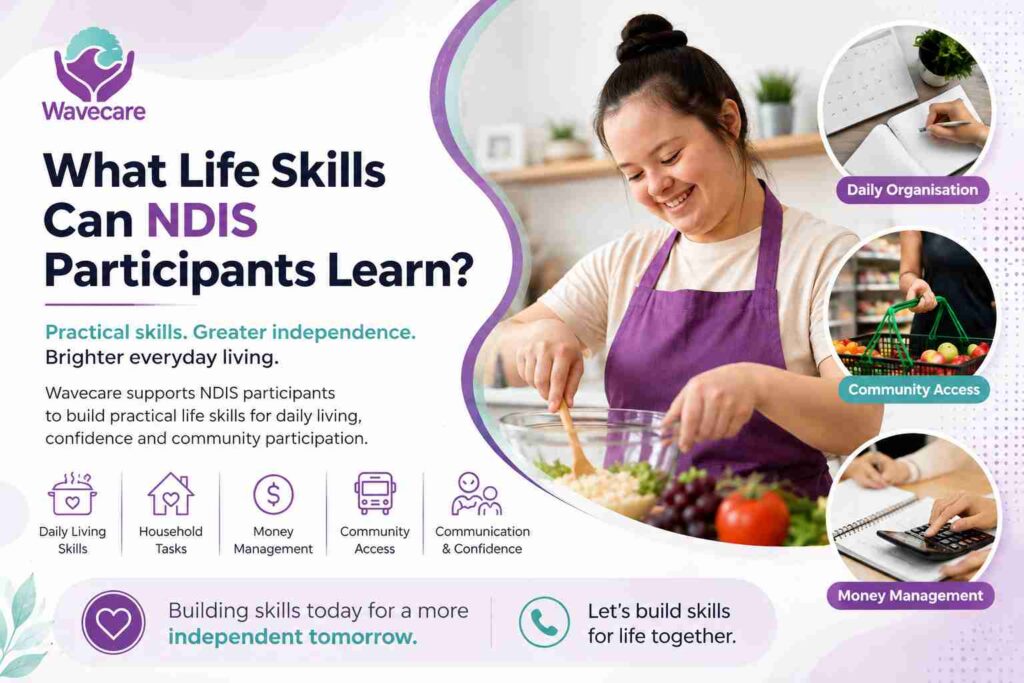
Everyday tasks can become easier when people have the right skills, support and opportunity to practise. An NDIS participant might want to prepare a simple dinner without relying on family. Someone else may want to manage laundry, plan grocery shopping, use public transport, or organise appointments more confidently. These practical goals can make a meaningful difference to daily life.
Development Life Skills NDIS support can help participants build practical abilities that relate to their individual goals. Depending on their needs, this may include cooking, household tasks, budgeting, communication, personal organisation, community access and decision-making.
The focus is not simply on completing a task for someone. Instead, support can help a participant learn, practise and build capacity at a suitable pace. Activities may take place at home, in the community, individually or within a group.
Importantly, effective NDIS life skills development should be person-centred. A participant’s abilities, functional capacity, communication style, mobility, sensory preferences, interests, cultural preferences and goals should all be considered.
For participants in Victoria, the right NDIS life skills support can provide practical opportunities to work towards greater independence and community participation. However, available supports and funding depend on each person’s NDIS plan and circumstances.
Why Development Life Skills Matter
Life skills are practical abilities people use to manage everyday life. For an NDIS participant, developing these skills may support greater independence and confidence.
The NDIS explains that goals can help participants build skills, do more things themselves and work towards greater independence.
Therefore, NDIS development life skills should connect with what matters to the participant.
For example, someone may want to:
- Prepare meals with less assistance.
- Keep their home organised.
- Complete laundry independently.
- Compare prices while shopping.
- Manage everyday spending.
- Communicate their needs more clearly.
- Use public transport with greater confidence.
- Organise appointments and reminders.
- Make everyday decisions.
- Participate more actively in their community.
These activities support capacity building life skills because they focus on practical learning rather than simply completing tasks on a participant’s behalf.
Over time, consistent practice may also support confidence, personal organisation, problem-solving and self-advocacy.
For more information about Wavecare’s approach, explore its Development Life Skills NDIS support service.
Common Daily Challenges
Participants can face different barriers when completing everyday activities. The challenges may depend on disability-related support needs, functional capacity, communication, mobility, cognitive requirements or the environment.
Common situations can include:
- Preparing meals feels difficult or unsafe.
- Household tasks become overwhelming.
- Managing money requires additional support.
- Grocery shopping involves too many decisions.
- Appointments are difficult to organise.
- Public transport creates uncertainty.
- Communication barriers make everyday interactions harder.
- Maintaining a daily routine can be challenging.
- Family members provide a large amount of day-to-day assistance.
- Making everyday decisions can feel stressful.
These challenges can affect more than one part of life. For example, difficulty with meal preparation may affect household routines and confidence. Likewise, difficulty using public transport may reduce community participation.
That is why NDIS independent living skills should be approached as practical, connected skills.
Common Challenges
Participants may encounter several practical challenges while developing NDIS daily living skills:
- Daily routines: remembering tasks and completing them in the right order.
- Meal preparation: planning, preparing and cleaning up after meals.
- Household tasks: cleaning, laundry and organising belongings.
- Money management: budgeting, comparing prices and tracking spending.
- Transport: planning routes and using public transport safely.
- Appointments: using calendars, reminders and schedules.
- Communication: expressing preferences, asking questions and requesting help.
The right support does not mean doing everything for the participant. Instead, support can focus on practising the parts of a task that the participant wants to learn.
When Participants Should Consider Development Life Skills Support
A participant may consider life skills support when they want to become more independent in everyday situations.
This may include someone who wants to:
- Develop stronger daily living skills.
- Learn household routines.
- Improve cooking and meal preparation.
- Practise budgeting and money management.
- Build communication skills.
- Improve community access.
- Learn public transport skills.
- Build confidence completing everyday activities.
- Prepare for greater independence.
- Develop skills that support future employment goals.
For example, a participant may practise grocery shopping. The goal may not simply be to buy groceries. Instead, the participant may want to learn how to create a shopping list, compare prices, find products, make decisions and complete payment.
This distinction matters. Life skills NDIS support should focus on the participant’s goals and capacity rather than providing a generic list of activities.
Life skills support also does not replace therapy, medical care or clinical services where those services are required. An Occupational Therapist, speech pathologist or another allied health professional may be appropriate when specialist assessment or therapy is needed.
Examples of Development Life Skills
Cooking and Meal Preparation
Cooking is one of the most practical areas of development life skills support NDIS services.
Depending on the participant’s abilities and goals, activities may include:
- Planning simple meals.
- Creating a shopping list.
- Following basic recipes.
- Preparing ingredients.
- Using kitchen equipment safely.
- Preparing simple meals.
- Storing food appropriately.
- Cleaning after cooking.
Support can be adjusted to the participant’s learning pace. Someone may begin with one simple meal, while another participant may work towards planning several meals each week.
Safety should remain important throughout the process.
Household Skills
Household routines can support independent living and a greater sense of control at home.
NDIS life skills activities may include:
- Cleaning surfaces.
- Washing clothes.
- Folding and storing laundry.
- Changing bed linen.
- Washing dishes.
- Organising belongings.
- Maintaining household routines.
- Learning how to keep frequently used areas organised.
The level of assistance should reflect the participant’s needs. Some people may need step-by-step guidance, while others may only need occasional prompting.
Money Management
Money management can involve many everyday decisions.
Practical activities may include:
- Creating a basic budget.
- Comparing prices.
- Planning grocery spending.
- Managing payments.
- Tracking spending.
- Understanding regular expenses.
- Making everyday purchasing decisions.
The purpose is not to provide financial advice. Instead, NDIS capacity building life skills activities can help participants practise practical organisational skills where appropriate to their goals and approved supports.
Communication Skills
Communication affects many parts of independent living.
Participants may practise:
- Starting and maintaining conversations.
- Making phone calls.
- Asking for assistance.
- Expressing preferences.
- Communicating needs.
- Asking questions.
- Self-advocacy.
- Communicating with service providers.
Communication activities can be adapted to a participant’s preferred communication method. This may include verbal communication, visual supports, written prompts or other appropriate strategies.
Where communication requires clinical intervention, an appropriately qualified allied health professional may be involved.
Community and Transport Skills
Community participation can help participants engage with places, services and activities that matter to them.
NDIS support for independent living may involve practical activities such as:
- Planning outings.
- Learning public transport routes.
- Navigating local facilities.
- Shopping.
- Understanding pedestrian safety.
- Planning travel routes.
- Attending community activities.
For example, a participant may practise travelling to a local shopping centre. The activity could involve checking a route, understanding stops, following directions and responding to changes.
The level of support should match the participant’s safety and support requirements.
Personal Organisation
Personal organisation can make everyday routines easier to manage.
Activities may include:
- Using a calendar.
- Organising appointments.
- Setting reminders.
- Creating daily routines.
- Preparing for activities.
- Organising personal belongings.
- Planning tasks for the day.
These skills can also support other goals. Better organisation may make it easier to attend appointments, participate in community activities or manage household responsibilities.
What Qualified Professionals Typically Assess
Life skills development should be adapted to the individual rather than delivered as a one-size-fits-all programme.
Support workers and relevant professionals may consider:
- Participant goals.
- Personal interests.
- Functional capacity.
- Existing daily living skills.
- Communication needs.
- Mobility.
- Cognitive requirements.
- Sensory preferences.
- Learning preferences.
- Social participation.
- Accessibility.
- Safety.
- Transport requirements.
- Home environment.
- Community environment.
- Cultural preferences.
- Current support requirements.
Different professionals may contribute depending on the participant’s circumstances.
For example, a Support Worker may help a participant practise everyday tasks. An Occupational Therapist may assess functional skills and recommend strategies or supports. A Support Coordinator may help connect supports with the participant’s plan and goals.
The NDIS currently explains that capacity building supports can include supports that help build living skills and increase independence and community involvement. Its Improved Daily Living category can include assessments, training and therapies.
Core Supports can also assist with everyday tasks and community participation, depending on the participant’s plan and available funding.
Can the NDIS Fund Life Skills Development?
This is one of the most common questions about development of life skills NDIS support.
The answer depends on the participant’s individual circumstances, plan and the support being considered.
The NDIS states that funded supports must meet its reasonable and necessary criteria. These include being related to the participant’s disability, helping them work towards their goals, representing value for money and being likely to be effective and beneficial.
Therefore, NDIS funding does not automatically cover every life skills activity or its full cost.
Participants should check their current plan and discuss suitable supports with their NDIS Planner, Local Area Coordinator, Support Coordinator, Plan Manager or relevant professional where appropriate.
The NDIS also notes that goals help inform planning, but having a goal does not automatically mean that a particular support will be funded.
Local Development Life Skills Support
Finding suitable Development Life Skills NDIS in Victoria starts with understanding the participant’s goals and support needs.
Services vary between providers and locations. Some activities may happen at home, while others may take place in the community. Individual and group options may also be available.
Wavecare states that it provides Development-Life Skills support, including practical skills such as cooking, budgeting, communication and hygiene.
Wavecare also identifies itself as a registered NDIS provider and lists NDIS Provider No. 4050172843 on its website.
Participants can compare providers based on:
- Services offered.
- Location.
- Availability.
- Staff suitability.
- Communication.
- Support approach.
- Participant preferences.
- Alignment with individual goals.
For local NDIS information in Victoria, participants can also use the NDIS Victoria information and local partner page to identify relevant NDIS partner organisations.
Why Professional Support Is Valuable
Appropriate professional support can make life skills practice more structured and relevant.
Benefits may include:
- Activities tailored to individual goals and abilities.
- Support that respects participant choice and control.
- Practical opportunities to develop everyday skills.
- Activities adapted to the participant’s learning pace.
- Support from appropriately trained or qualified professionals.
- Practical strategies that encourage independence and community participation.
A good support approach should also allow participants to make choices. The participant should understand what they are practising and why it matters to them.
For example, one person may prioritise cooking. Another may focus on public transport. Someone else may want to improve household routines before moving towards more independent living.
The NDIS describes its Core Supports as helping with everyday activities and community involvement, while Capacity Building Supports are designed to build independence and skills.
How Participants Can Access Life Skills Support
Getting started does not need to be complicated.
1. Review Your NDIS Goals
Start by identifying what you want to achieve. This could involve greater independence, community participation, employment, social activities or daily routines.
The NDIS recommends focusing on what is important to you when setting goals.
2. Identify the Skills You Want to Develop
Think about everyday tasks that feel difficult or areas where you would like more confidence.
You might choose cooking, shopping, budgeting, communication, transport or personal organisation.
3. Discuss Your Support Requirements
Consider what type of assistance you need. You may need prompting, supervision, practical assistance or opportunities to practise tasks.
4. Speak With a Suitable Provider or Professional
Ask providers about their services, staff, locations and approach to life skills development.
You can also discuss your needs with your Support Coordinator, LAC, NDIS Planner, Plan Manager or relevant allied health professional.
5. Check Your NDIS Funding
Confirm that the proposed support aligns with your plan and the relevant NDIS rules.
Your available funding depends on your individual plan. Not every participant has funding across every support budget.
6. Agree on a Practical Approach
Once suitable support is identified, discuss the activities, frequency, location and level of assistance.
The approach should remain person-centred and responsive to changing goals.
What Is the Difference Between Life Skills and Daily Living Skills?
Life skills and daily living skills overlap, but they are not always used in exactly the same way.
Daily living skills generally refer to practical activities needed to manage everyday life. These may include cooking, cleaning, laundry, personal organisation and household routines.
Life skills can include these activities but may also cover broader abilities such as communication, decision-making, problem-solving, community access, budgeting and self-advocacy.
Within the NDIS, the most appropriate support depends on the participant’s disability-related needs, goals, plan and the type of support being considered.
The important point is not the label alone. The focus should be on what the participant wants to achieve and what support is appropriate for their circumstances.
What Participants Can Expect From Support
Good NDIS life skills programs should be practical, respectful and centred around the participant.
Participants can expect:
- Personalised skill development.
- Activities connected to individual goals.
- Support adapted to their learning pace.
- Practical activities in real-life settings.
- Clear communication.
- Respectful, person-centred support.
- Opportunities to practise independence.
Participants should also feel comfortable asking questions about how activities relate to their goals and support needs.
No provider can guarantee a particular outcome. People learn at different rates, and progress can depend on many factors.
Choosing an NDIS Provider in Victoria
When looking for an NDIS Provider in Victoria, consider more than the service name.
Ask whether the provider:
- Offers the support you are looking for.
- Services your local area.
- Understands your individual goals.
- Can adapt activities to your needs.
- Communicates clearly.
- Respects your choices and preferences.
- Has suitable staff and support arrangements.
- Can explain how its services work with your NDIS plan.
Wavecare lists Development-Life Skills among its services and provides disability support across areas including daily tasks, community participation, employment-related supports and transport.
If you would like to discuss your requirements, you can contact Wavecare about NDIS support and ask about available Development Life Skills services in Victoria.
Frequently Asked Questions
What are Development Life Skills under the NDIS?
Development Life Skills refers to practical support that may help an NDIS participant build skills for everyday life and greater independence. Depending on the participant’s goals and plan, activities may include cooking, budgeting, communication, household tasks, organisation and community access.
What life skills can NDIS participants develop?
Participants may develop cooking, meal preparation, cleaning, laundry, shopping, money management, communication, personal organisation, transport and community access skills. The appropriate activities depend on individual goals, abilities and support requirements.
Can the NDIS fund life skills development?
Some life skills-related supports may be funded when they meet the NDIS requirements and are included or available within the participant’s plan. Funding is not automatic, and participants should check their individual plan and discuss their needs with the appropriate NDIS contact or professional.
Can life skills support be provided at home?
Yes, suitable life skills activities may take place at home when the support is appropriate and aligns with the participant’s goals and plan. Activities can also occur in community settings when community participation or practical learning is part of the participant’s support.
Can NDIS life skills support include community activities?
It can, depending on the participant’s goals, plan and approved supports. Community activities may include shopping, public transport practice, navigating local facilities and participating in social or community activities.
Who can provide life skills support under the NDIS?
The appropriate provider depends on the type of support required. Support Workers may assist with practical activities, while Occupational Therapists and other allied health professionals may provide specialist assessment or therapy when required.
Build Practical Skills With the Right Support
Developing practical skills can help participants work towards greater independence, confidence and community participation. Whether the goal involves cooking dinner, managing a household routine, using public transport or communicating personal needs, the right approach starts with the participant.
Wavecare provides personalised NDIS support services, including Development-Life Skills, across Victoria. Its website lists NDIS Provider No. 4050172843 and contact details for enquiries.
To discuss your goals and support needs, call 0401 434 001 or contact Wavecare today. The team can help you understand the available services and discuss whether its support may suit your circumstances.
Important Information
NDIS supports and funding depend on individual plans, circumstances and current NDIS rules. Not every activity, service or cost will be funded. Some needs may require specialist or allied health input, and life skills activities cannot guarantee a particular outcome.